
Key Takeaways
- The Mediterranean diet is a long-term eating pattern, not a single food or a short-term diet.
- It emphasizes olive oil, vegetables, fruits, whole grains, legumes, nuts, and fish, while reducing highly processed foods.
- It receives research attention because it combines plant-based foods, quality fats, food variety, and sustainable lifestyle habits.
- For consumers, the Mediterranean diet offers a healthy eating approach that is easier to maintain over time.
1. A Complete Eating Pattern
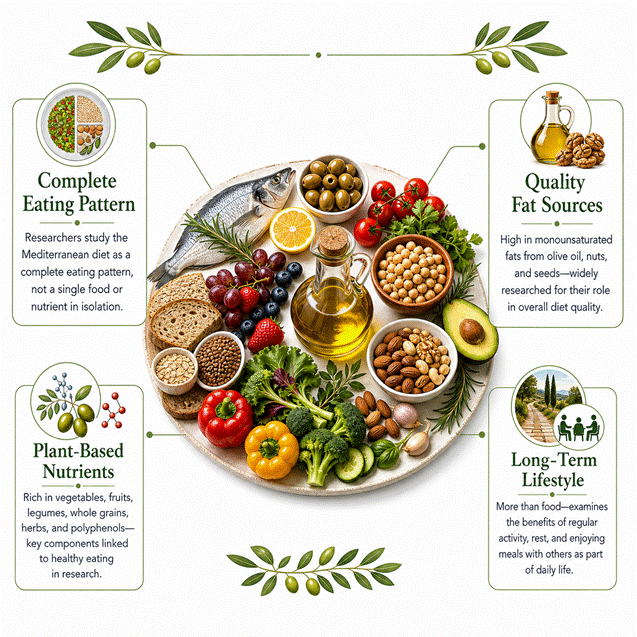
The Mediterranean diet is widely studied in nutrition research because it does not represent a single “superfood.” Instead, it represents a complete way of eating.
This dietary pattern typically includes more vegetables, fruits, legumes, whole grains, nuts, fish, and olive oil, while reducing red meat, processed meats, refined sugar, and highly processed foods.
For nutrition research, this pattern is closer to how people actually eat over the long term. Researchers can use it to observe the overall dietary structure rather than focusing on only one nutrient.
2. Focus on Food Quality and Healthy Fat Sources
It encourages nutrient-dense foods, plant-based ingredients, and higher-quality fat sources such as olive oil, nuts, seeds, and fish. It is not simply a “low-fat diet.” Instead, it emphasizes choosing better fat sources and reducing highly processed foods.
As a result, the Mediterranean diet is often used as a model for healthy eating. It shows that nutrition management is not only about “eating less,” but also about building a more balanced and stable food structure.
3. Plant-Based Nutrients and Research Interest
The Mediterranean diet naturally contains a wide range of plant-based foods. Vegetables, fruits, legumes, herbs, spices, olives, and olive oil contain different types of phytonutrients, among which polyphenols are frequently discussed in research. For example, olive-derived polyphenols and hydroxytyrosol often appear in studies related to the Mediterranean diet.
4. Related to Long-Term Health Research
The Mediterranean diet has been widely studied in relation to topics such as cardiovascular health, metabolic health, healthy aging, inflammation-related markers, and overall quality of life.
The strength of the Mediterranean diet comes from the overall pattern: food variety, quality fats, plant-based nutrients, moderate eating habits, and a sustainable lifestyle.
This is also an important reason why it differs from many short-term diet approaches.
5. More Suitable for Long-Term Healthy Living
Another reason the Mediterranean diet receives attention is that it is flexible and realistic. It can be adapted to different countries, eating habits, and daily routines, making it easier to maintain than many extreme diet plans.
Conclusion
The Mediterranean diet is widely studied because it is both scientifically meaningful and practical for everyday life. It is not based on one single ingredient, but on a balanced pattern of plant-based foods, quality fats, and sustainable eating habits.
For EYANK, the Mediterranean diet is a source of nutritional inspiration. It supports a thoughtful approach to plant-based nutrients, quality fat sources, and everyday wellness support.
Compliance Note
This article is for general nutrition education only.
References
1.The New England Journal of Medicine, Primary Prevention of Cardiovascular Disease with a Mediterranean Diet: https://www.nejm.org/doi/full/10.1056/NEJMoa1800389
